Recycled Polyester Fabric (rPET)
— Manufactured in Thailand
Since
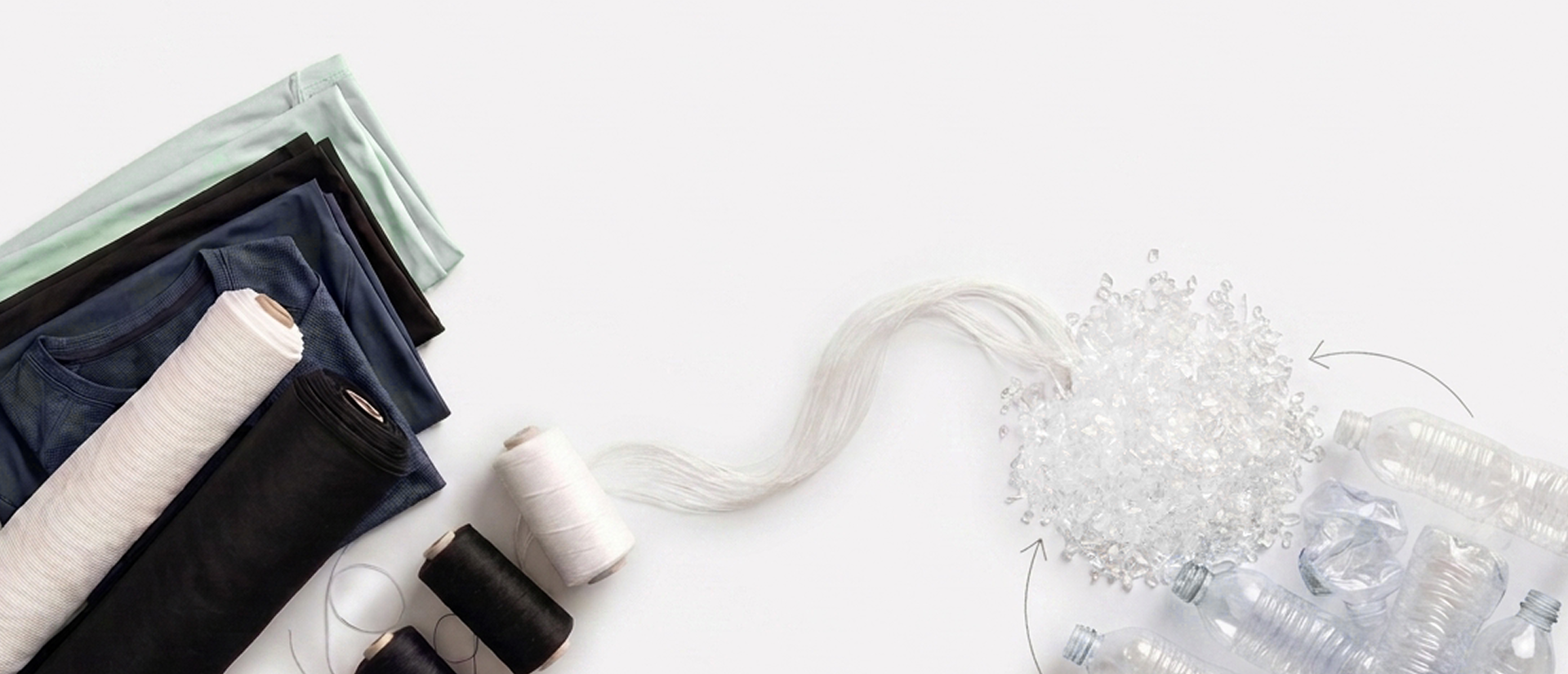
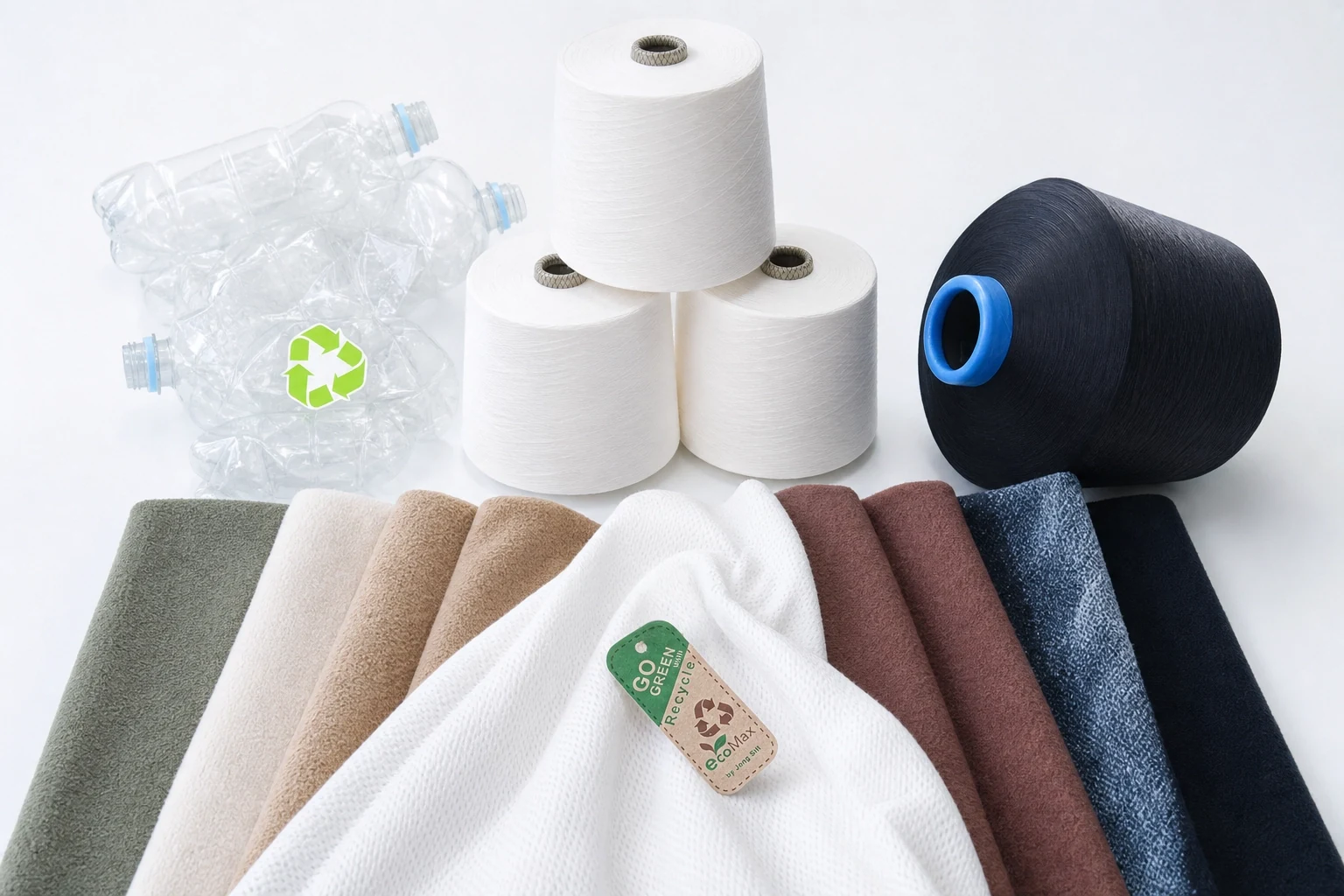
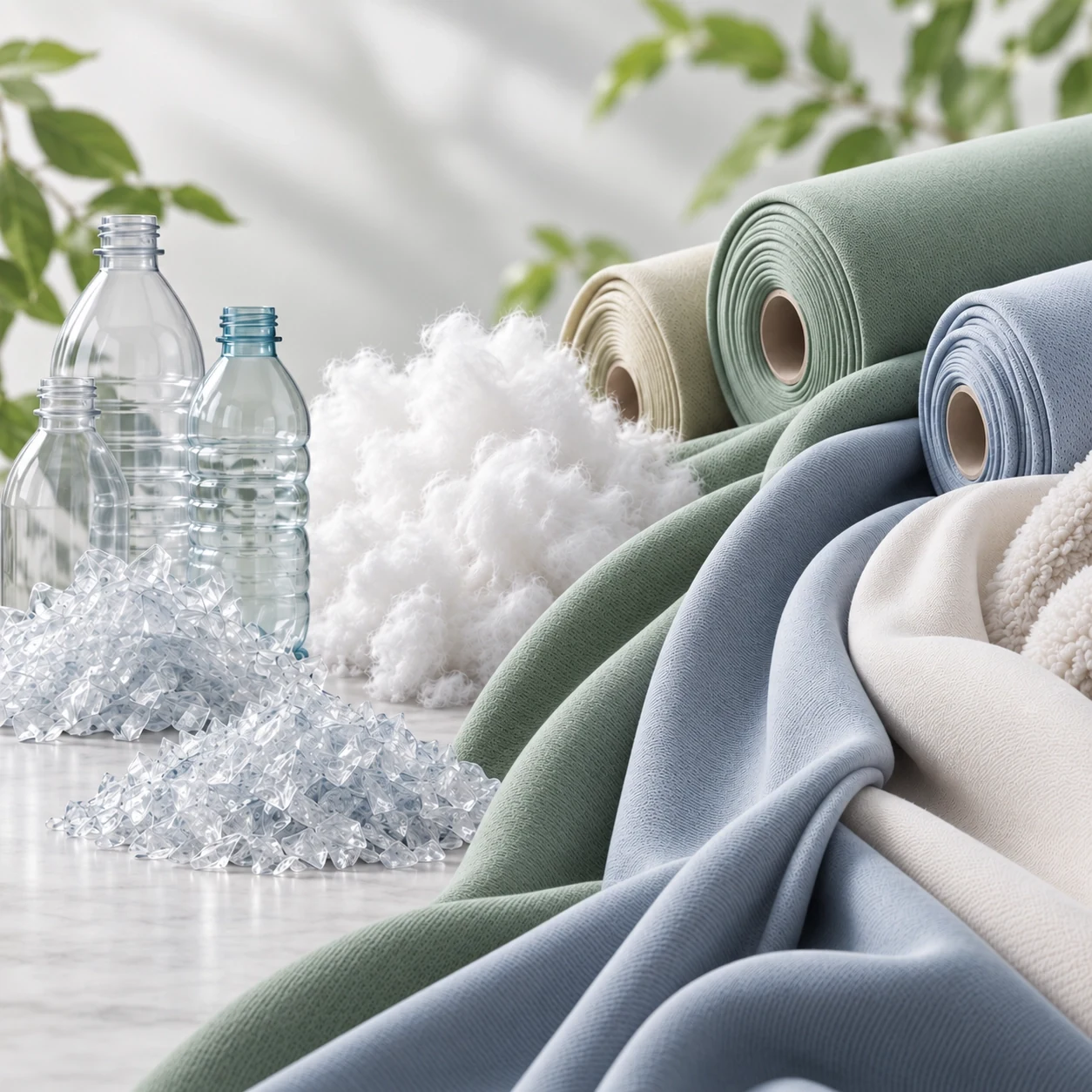
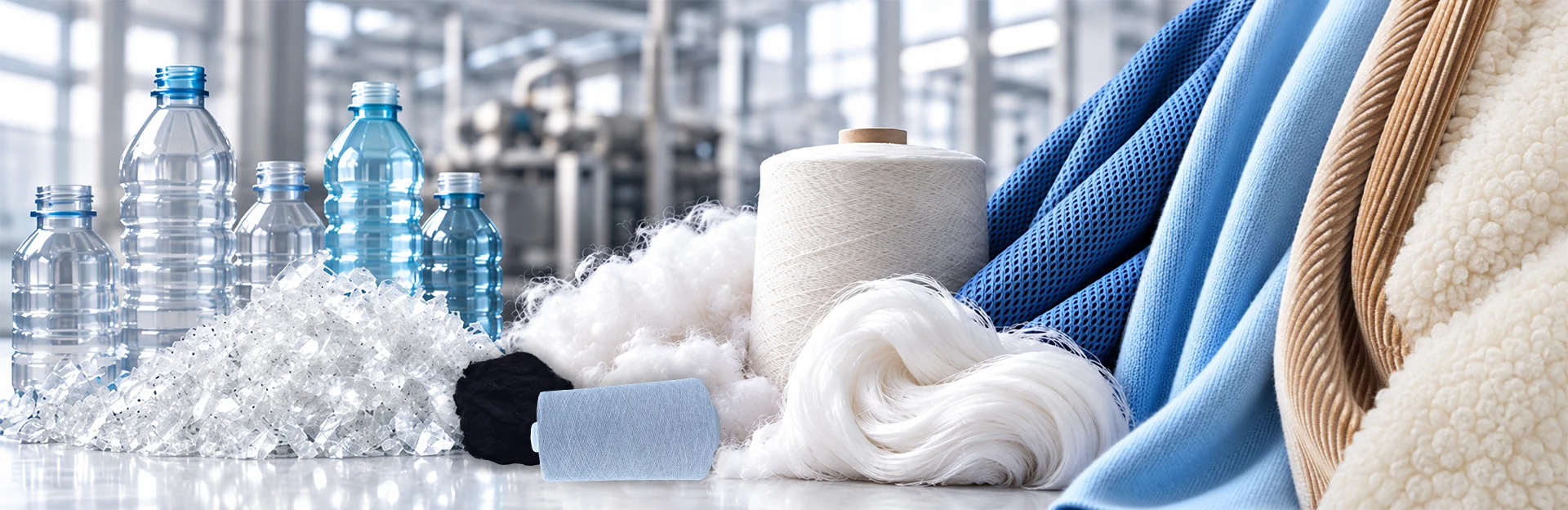
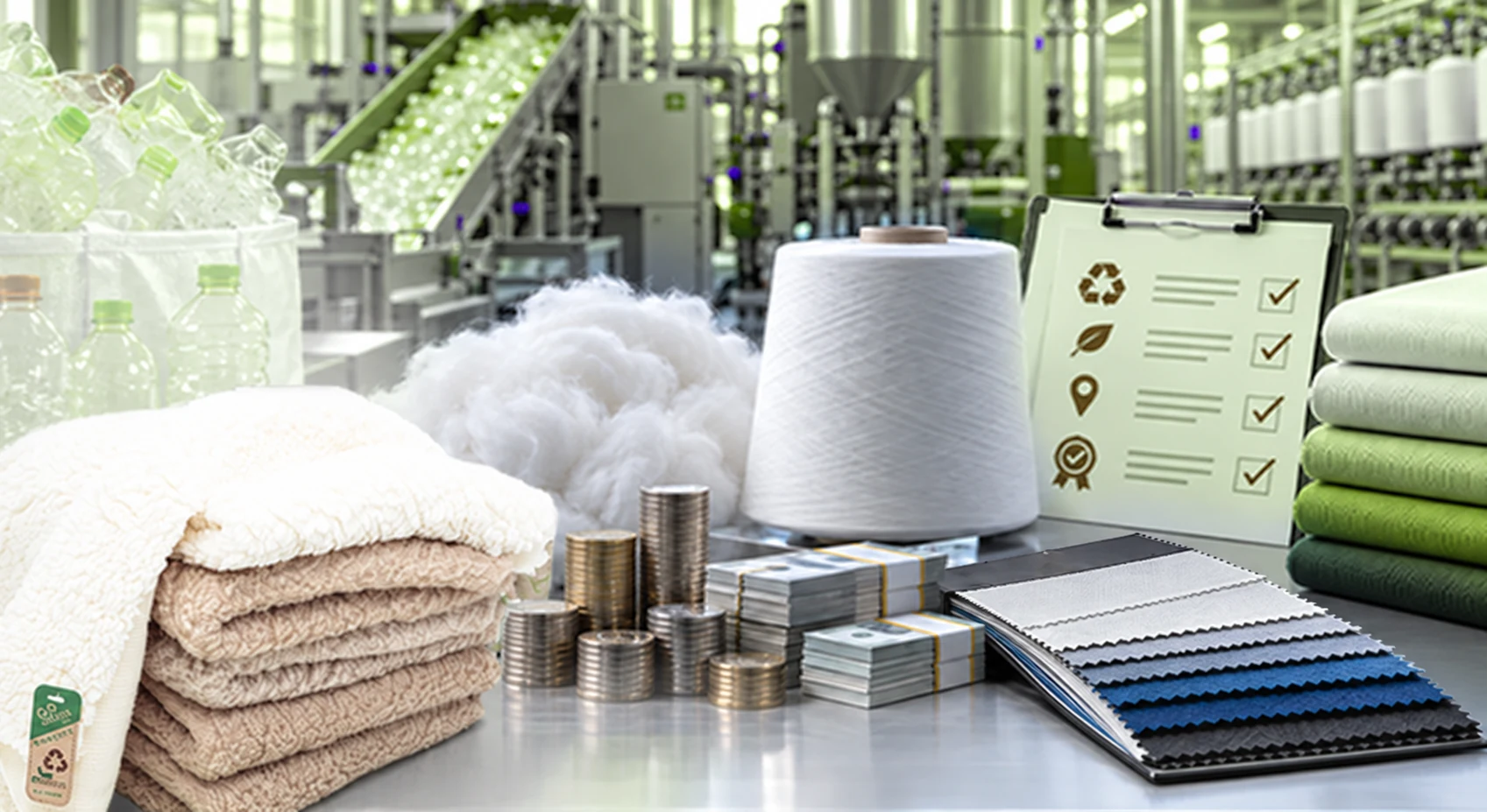
Recycled polyester fabric, also called rPET, is a textile knitted from polyester yarn made out of recovered PET — mostly post-consumer drinking bottles. It performs almost identically to virgin polyester and uses substantially less energy and water to produce. Jong Stit produces rPET knitted fabrics in Thailand using recycled polyester yarn made from recovered PET.
Recycled polyester fabric, also called rPET, is a textile knitted from polyester yarn made out of recovered PET — mostly post-consumer drinking bottles. It performs almost identically to virgin polyester and uses substantially less energy and water to produce. Jong Stit produces rPET knitted fabrics in Thailand using recycled polyester yarn made from recovered PET.
Chemically, rPET and virgin polyester are the same polymer: polyethylene terephthalate. That is why a recycled and a virgin fabric of the same construction handles drape and wear the same way. The difference is upstream, in where the raw polymer came from.
"100% recycled polyester"
means every polyester fibre in the fabric originates from recovered material.
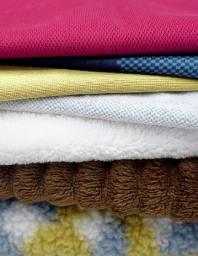
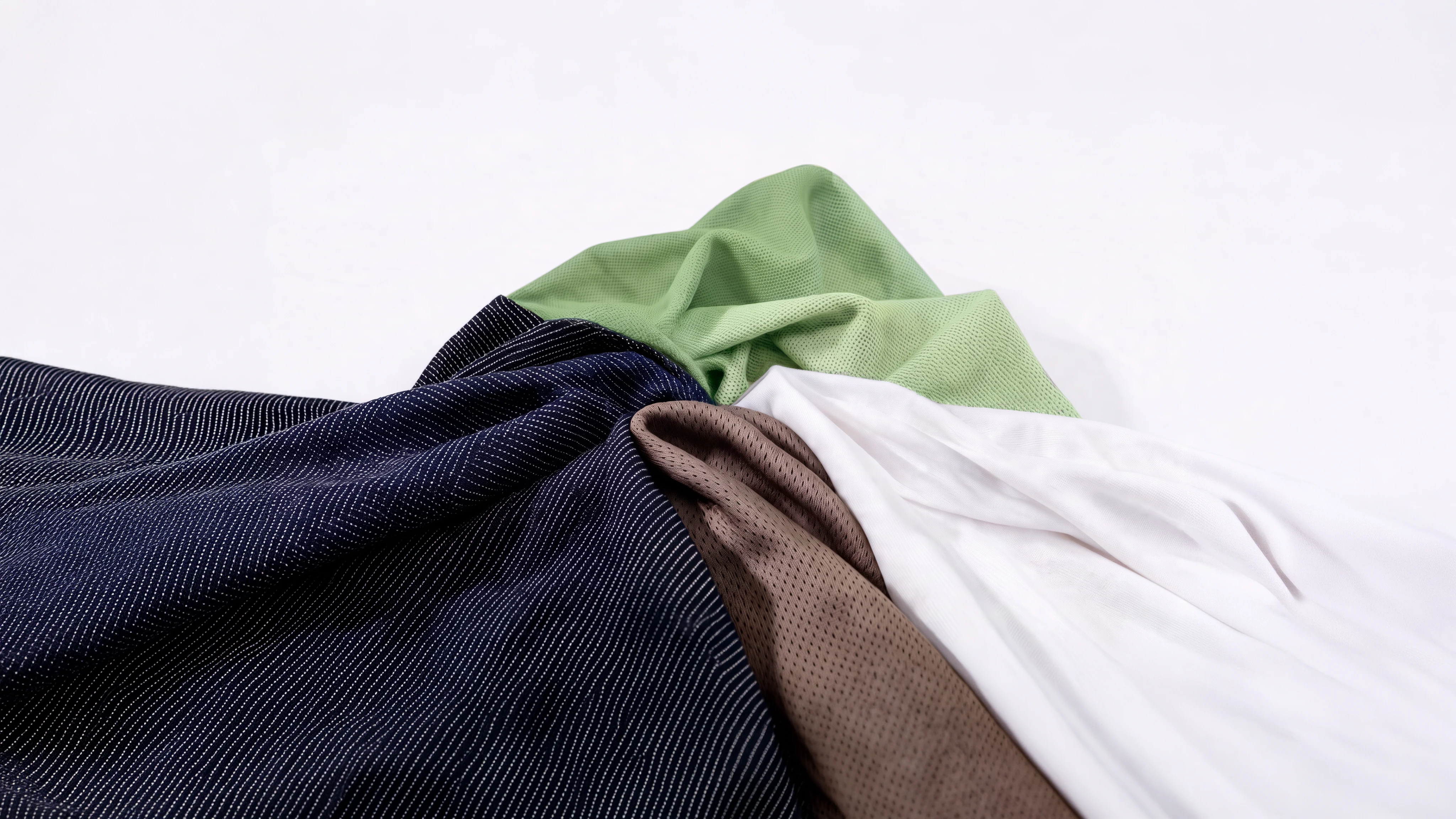
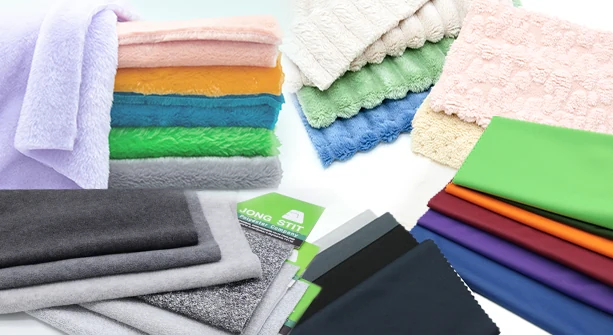
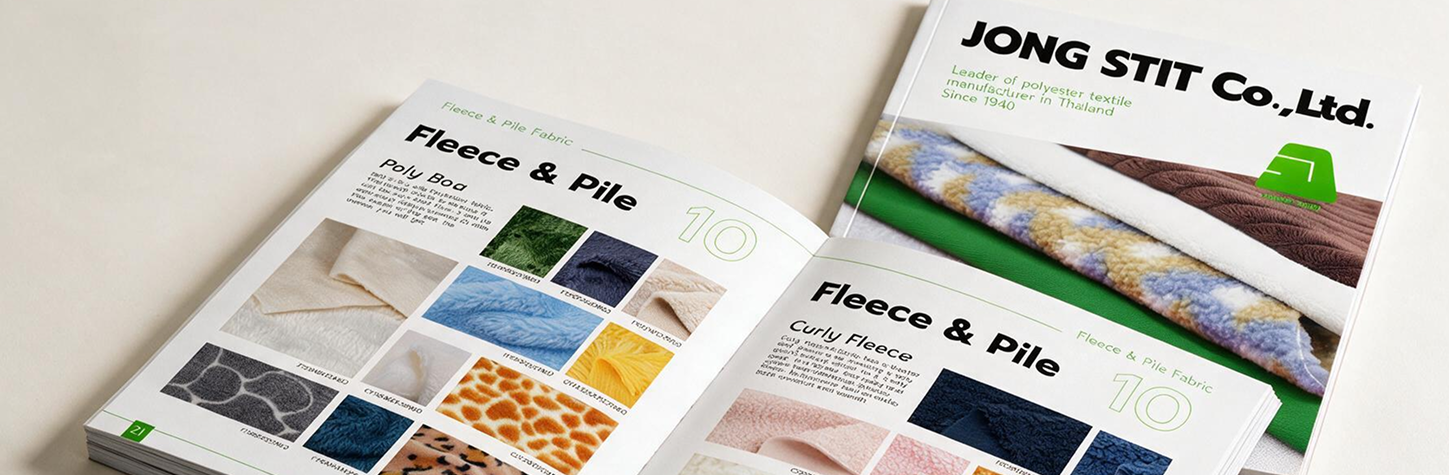
Jong Stit manufactures rPET fabrics across warp knit and circular knit constructions, ranging from lightweight tricot to heavyweight poly boa.
How is recycled polyester fabric made?
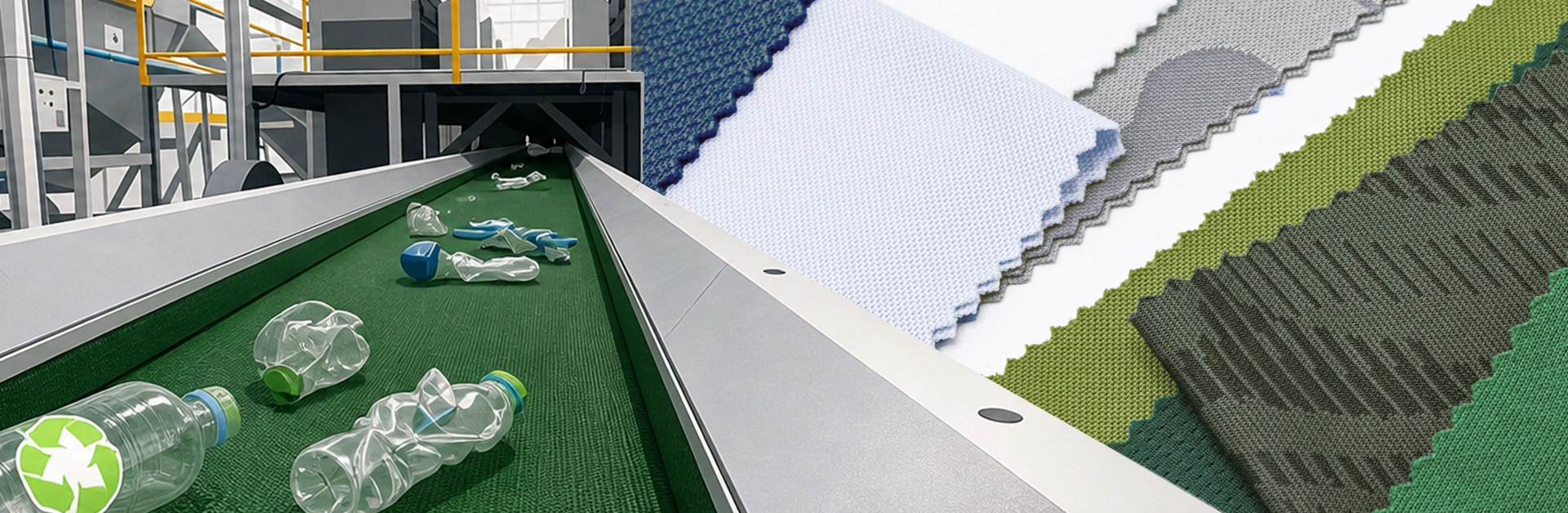
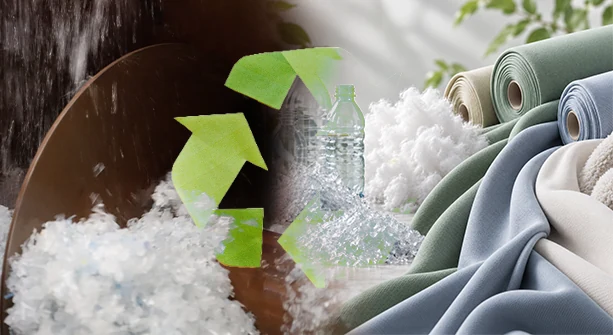
Recycled polyester fabric is made in six main stages: bottle collection and sorting, washing and flaking, melting and extrusion into filament, texturing into yarn, knitting into greige fabric, and finally, dyeing and finishing. Jong Stit carries out stages three through six—from melting and extrusion all the way to dyeing and finishing—entirely within its own manufacturing plant in Samut Sakhon.
1
Collection and sorting
Post-consumer PET plastic bottles are collected and sorted by polymer type and color. Clear bottles yield the whitest flakes, allowing dyeing across the widest range of shades. Conversely, mixed-color raw material limits factories to producing only dark shades.
2
Washing and flaking
Bottles are stripped of caps and labels, washed to remove residue and adhesive, then ground into flakes. Contamination control at this stage is what determines whether the finished yarn runs cleanly — most quality problems in rPET originate here rather than in knitting.
3
Melting and extrusion
The clean flakes are dried, melted, and extruded through a spinneret to form continuous long fibers. This method is called mechanical recycling, which is the main commercial method.
4
Texturing and yarn preparation
Flat filament is drawn and textured to build bulk, stretch, and hand. Yarn count and texturing parameters set at this stage determine whether the resulting fabric is crisp or soft. Jong Stit carries out all yarn texturing in-house.
5
Knitting
Yarn is knitted on circular or warp machines into greige fabric. Jong Stit utilizes advanced, high-precision circular and warp knitting machinery, allowing the same rPET yarn to be seamlessly crafted into diverse constructions—from lightweight single jersey and interlock to French terry, tricot, sherpa, or poly boa.
6
Dyeing and finishing
Greige fabric goes through dyeing and finishing to the customer's specification, including performance finishes such as brushing, anti-pill, water repellency, anti-UV and antibacterial treatment. Jong Stit offers a wide range of recycled polyester fabrics, with a minimum order quantity of just 1,000 kg. Adding pigment to the molten polymer before extrusion removes the fabric-dyeing stage entirely, which saves a significant amount of water and energy.
Is recycled polyester fabric safe to wear?
Yes. Recycled polyester fabric that carries
OEKO-TEX STANDARD 100
certification has been tested against a defined list of harmful substances and is safe for skin contact, including in products for babies and small children. The certification, not the recycled origin, is what determines safety.
Does rPET contain residues
from the original bottles?
Mechanical recycling melts and re-extrudes the polymer at high temperatures after an intensive washing process, making it safe to a certain level. If you still have concerns, you can verify safety by requesting quality certifications like OEKO-TEX Standard 100, which confirms that the produced fabric is free from harmful residues or dangerous chemicals. For reference, Jong Stit's OEKO-TEX Standard 100 certificate numbers are 13.HTH.24182, 21.HTH.61115, 22.HTH.98898, and 08.PE.57165.
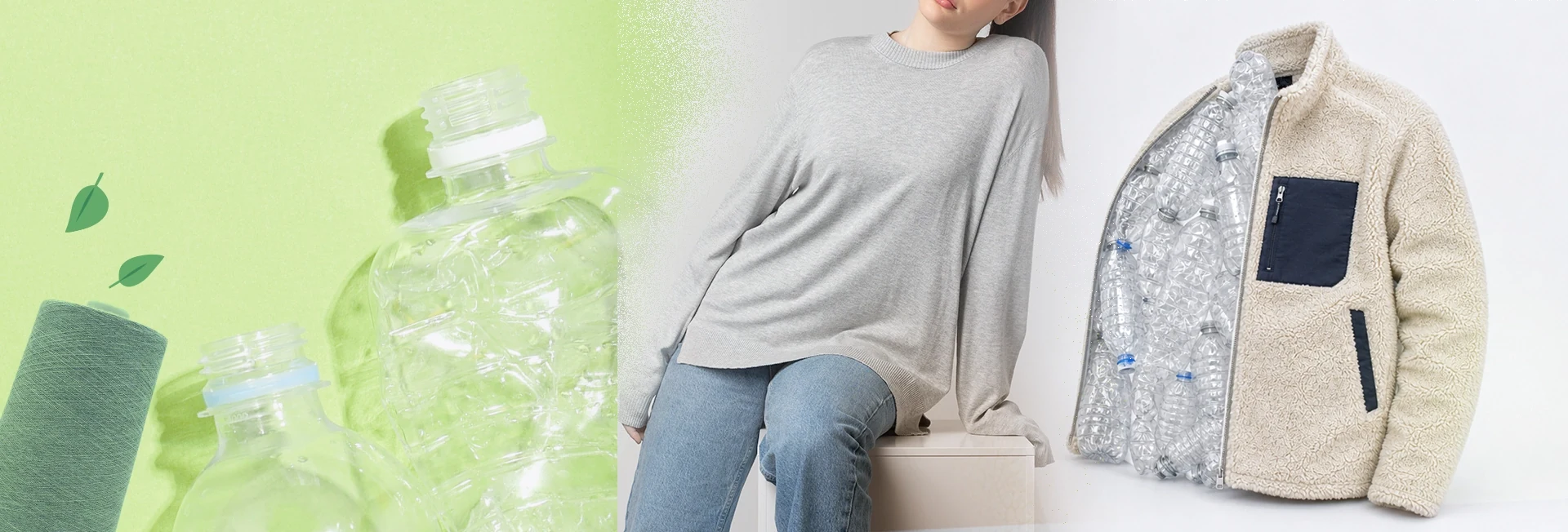
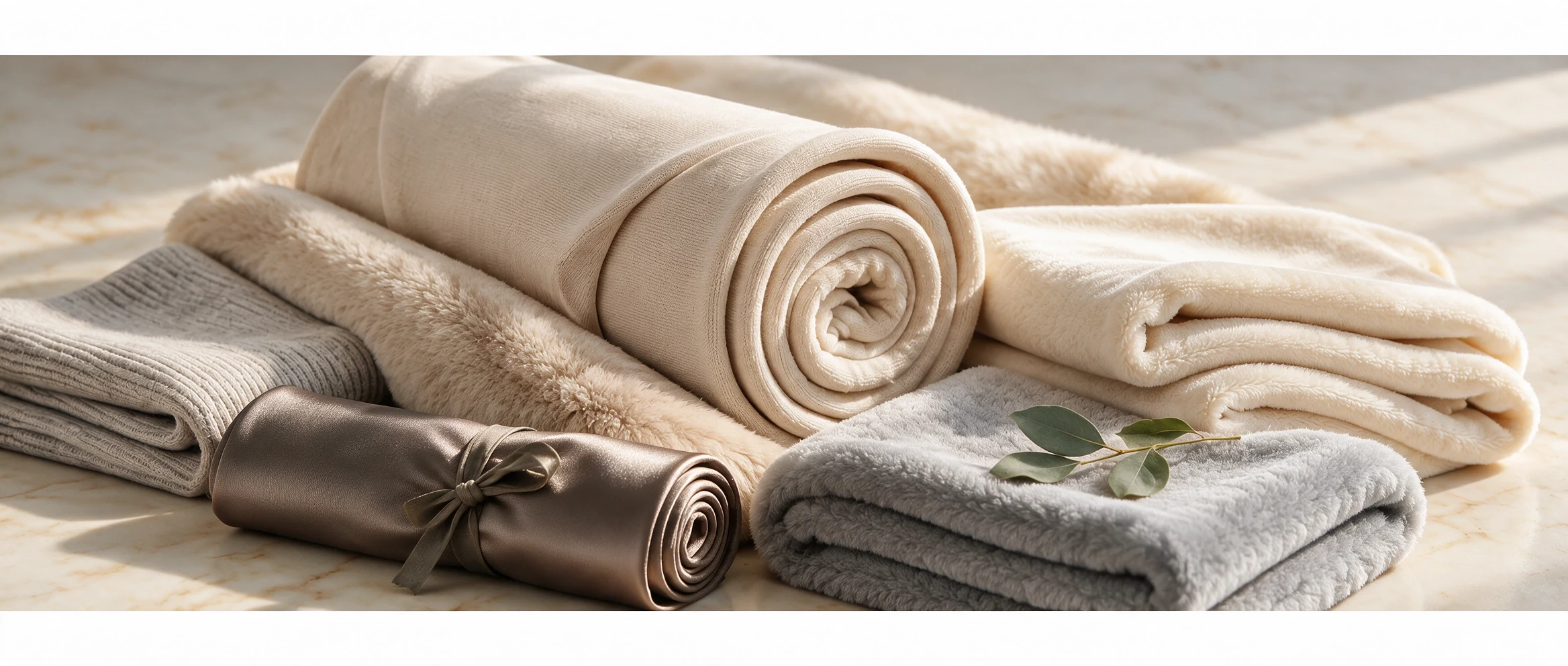
PET bottle and soft jersey textiles made with recycled polyester
What recycled polyester fabrics does Jong Stit manufacture?
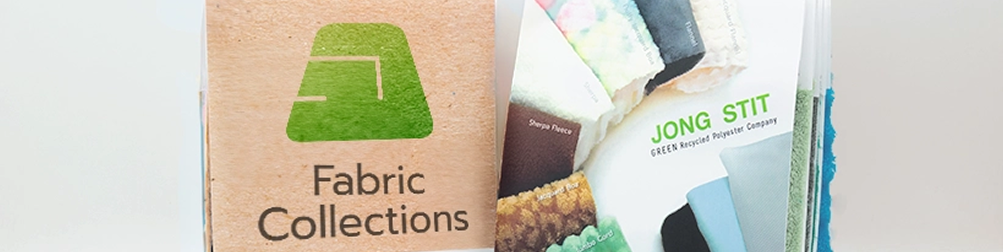
Jong Stit supplies recycled polyester qualities across circular knit, warp knit and pile constructions.
All are available as GRS-certified rPET with transaction certificates.
Circular knit(Weft knit)
Recycled Polyester
Interlock
Single jersey
Pique / Juti
Mesh
Double knit / Scuba
Polyester/Spandex
Rib
Fleece
Polyboa
Sherpa
Boucle
Corduroy fleece
Polar fleece
Velfleece
Velour
Terry
GSM.
Adjustable
Warp knit
Jumbo Cord
Faux Rabbit Fur
Flannel
Tricot Half
Tricot Brush
Tricot Mesh
Tricot Satin
Tricot Fancy
Tricot Velvet
Available finishes include
Anti-Pill
Water Repellent
Anti-UV
Anti-Bacterial
Brushed
Dope Dyed
What are the disadvantagesof recycled polyester?
Recycled polyester has four real limitations: shade consistency varies with input quality, it sheds microplastics exactly as virgin polyester does, mechanical recycling degrades the polymer over repeated cycles, and it usually costs more.
Shade consistency and batch variation
Recycled flakes vary in quality depending on the collection source. Batch-to-batch variations may affect the fabric's color, potentially resulting in a duller shade or a color shift.
Microplastic shedding
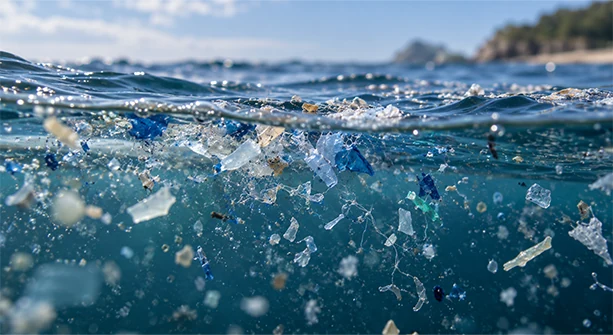
rPET sheds microfibres during laundering at broadly the same rate as virgin polyester — recycled content does not solve this.
The limits of mechanical recycling
Every time plastic bottles are melted down into fibers, the polymer's quality degrades, and these textiles can no longer be recycled again afterward.
Price
rPET yarn typically costs more than virgin polyester yarn because recycled materials require additional processing and certification.
How do you order recycled polyester fabric from Jong Stit?
Send your specification — construction, target gsm, composition, colour and quantity,
and we will get back to you as soon as possible.
Yes. Recycled polyester matches virgin polyester on strength, durability, drape and care because it is the same polymer. It uses less energy and water to produce and diverts PET waste from landfill. Its limitations are shade consistency on pale colours and a modest price premium.
What is the difference between recycled polyester and polyester?
Only the source of the raw material. Virgin polyester is made from newly refined petroleum; recycled polyester is made from recovered PET, usually drinking bottles. Both are polyethylene terephthalate, so finished fabrics of the same construction perform identically.
Does recycled polyester release microplastics?
Yes, at broadly the same rate as virgin polyester. Recycled content does not reduce shedding. Construction and finish matter more than fibre origin — tightly knitted, singed surfaces shed less than brushed or pile fabrics.
What does rPET mean?
rPET stands for recycled polyethylene terephthalate — PET plastic that has been recovered, cleaned and reprocessed. In textiles it refers to yarn and fabric spun from that recovered polymer rather than from virgin resin.
Is recycled polyester safe to wear against skin?
Yes, when it carries OEKO-TEX STANDARD 100 certification, which tests for harmful substances and covers products for babies. Polyester is hypoallergenic; irritation is usually caused by finishing chemistry or trapped moisture rather than the fibre.
Can recycled polyester be recycled again?
Sometimes. Mechanical recycling shortens fibre each cycle, so quality limits how many passes are possible, and mixed or blended textile waste often cannot be processed at all.
How do I verify a supplier's recycled polyester claim?
Ask for the GRS scope certificate number and verify it in Textile Exchange's public database.