



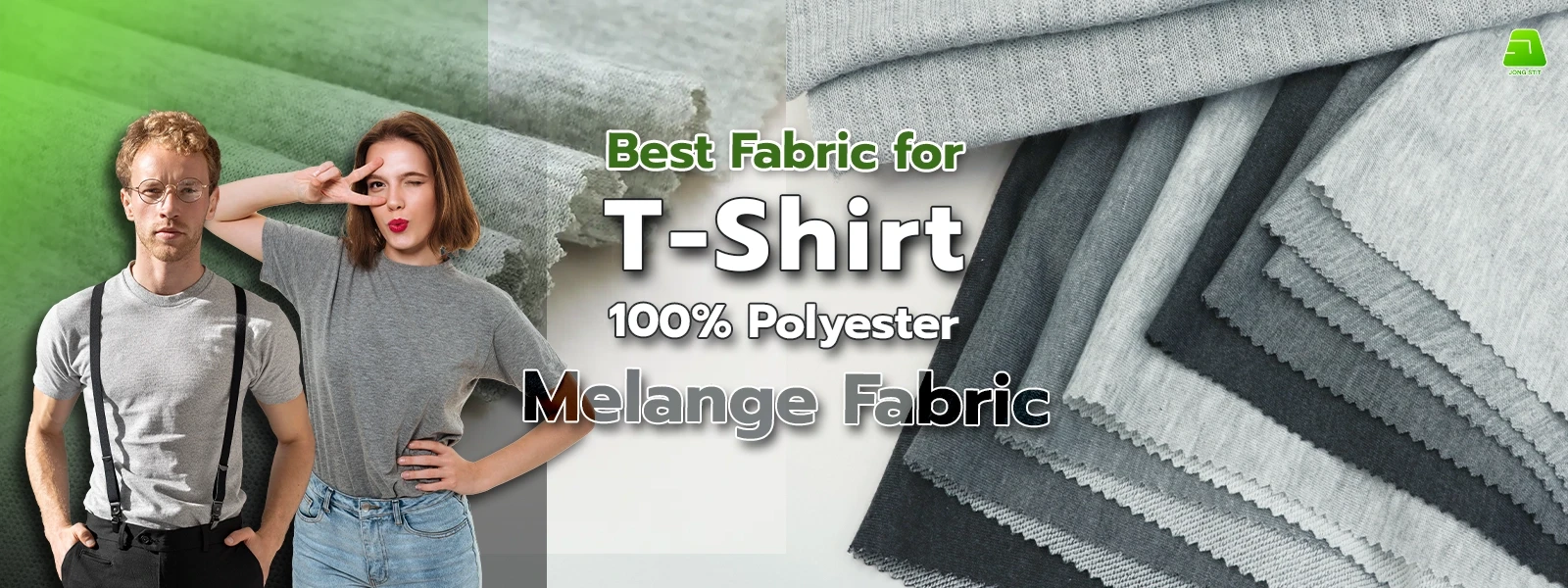
Best Fabric for T-Shirt | 100% Polyester Melange Fabric
Discover the benefits of using 100% polyester melange fabric for your T-shirt production. Learn about its cost-effectiveness, sustainability, and quality, along with various types of melange fabrics for diverse designs.
In the dynamic world of T-shirt manufacturing, the fabric choice can make or break your brand. Enter polyester Melange fabric – a versatile, cost-effective, and eco-friendly option gaining traction among fabric for T-shirt manufacturing, eco-conscious brands, and fashion-forward businesses alike.
Table of content [Hide]
- Understanding Polyester Melange Fabric
- The Rise of Melange Fabric
- Benefits of Polyester Melange Fabric for T-Shirt
Garments Cost-Effective - Eco-Friendly
- Quality and Durability
- Types of Melange Fabrics for T-Shirt Production
- Pique Melange Knitted Fabric
- Single Jersey Melange Knitted Fabric
- French Terry Melange Knitted Fabric
- Rib Melange Knitted Fabric
- Conclusion
Understanding Polyester Melange Fabric
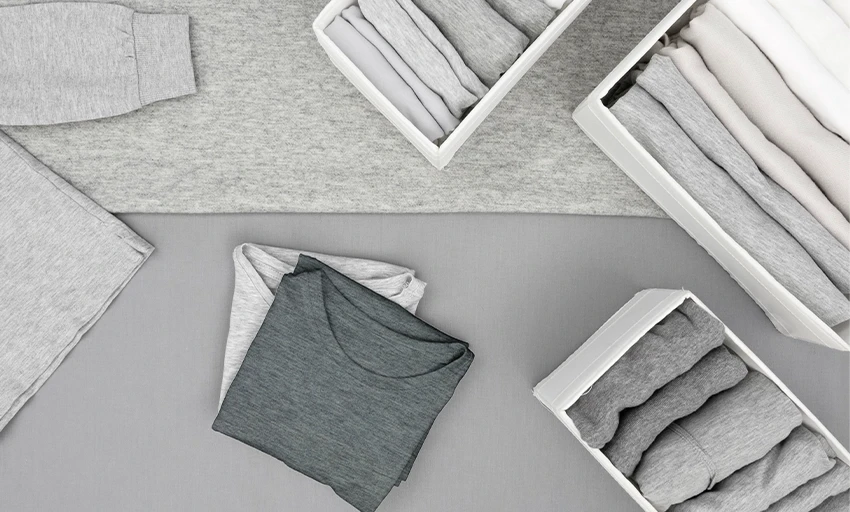
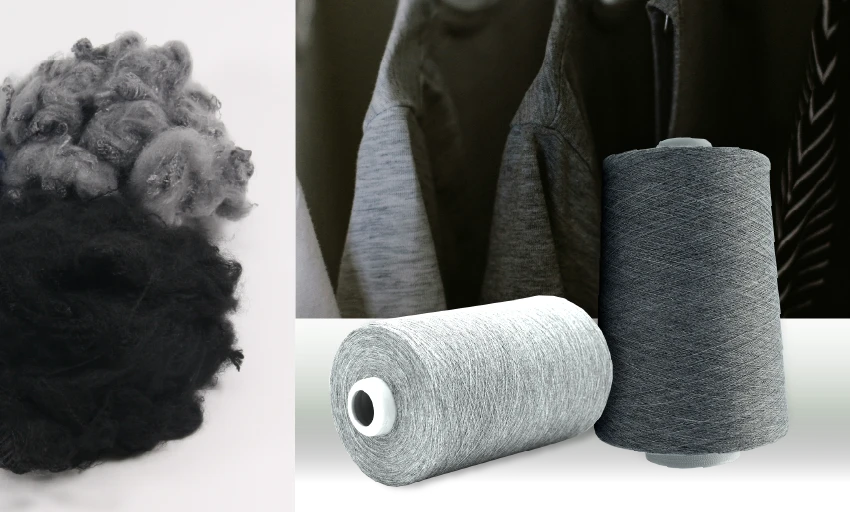
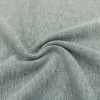
Polyester melange fabric is known for its distinctive heathered appearance. The effect comes from dyeing at the fibre stage: staple fibres in different colours are blended in set proportions, then spun into yarn and knitted into fabric. This is different from conventional piece dyeing, where the fabric is dyed after knitting, and different again from yarn dyeing, where already-spun yarn is dyed.
The Rise of Melange Fabric
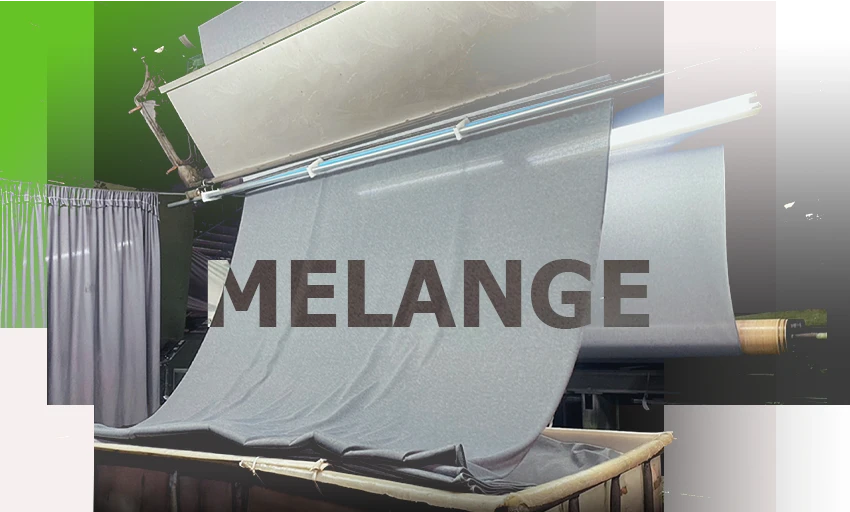
Among the various fabrics used for T-shirts, 100% polyester melange fabric has emerged as a popular choice. This fabric's unique characteristics, such as its soft, smooth texture and vibrant colors, have made it a favorite among consumers. What sets melange apart is that the colour is applied at the fibre stage, which removes the piece-dyeing step and the water, chemicals and energy that step consumes.
Benefits of Polyester Melange Fabric for T-Shirt Garments Cost-Effective
Polyester melange fabric is generally more cost-effective than other fabrics, making it an excellent choice for manufacturers looking to reduce production costs without compromising quality.
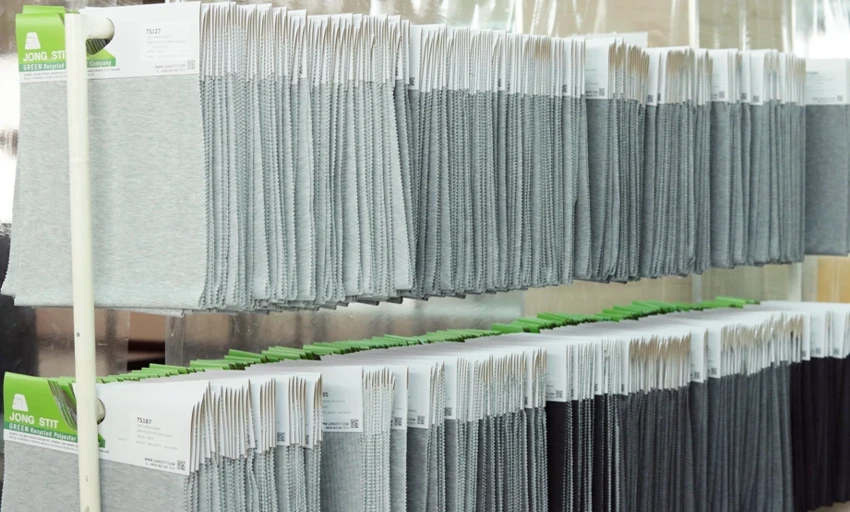
Dyeing at the fibre stage removes the piece-dyeing step, reducing costs associated with dyes, chemicals, water, and energy consumption. This makes melange a budget-friendly choice for T-shirt fabric.
Eco-Friendly
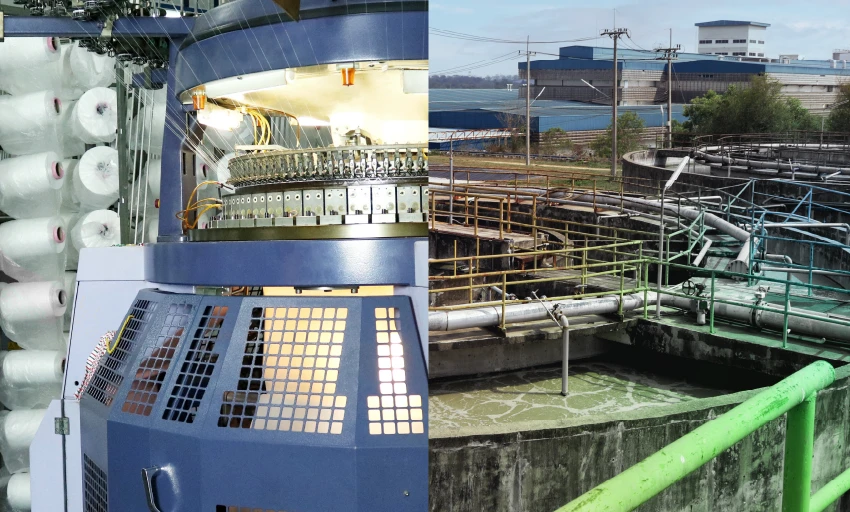
Removing the piece-dyeing step meaningfully reduces the environmental load of colouring the fabric: less chemical use, less dye effluent and lower energy consumption at that stage. Dyeing at the fibre stage still uses water and chemicals, so melange reduces the dyeing burden rather than eliminating it.
Quality and Durability
Melange gives even, consistent colour across the fabric because the colour is blended in at fibre stage, which avoids the lot-to-lot shade variation common in piece dyeing. Colourfastness itself depends on the dye class used: for high light and sublimation fastness, specify melange made from dope-dyed fibre, where pigment is locked into the polymer.
Types of Melange Fabrics for T-Shirt Production
Polyester melange is knitted in several structures, each suited to different T-shirt applications.
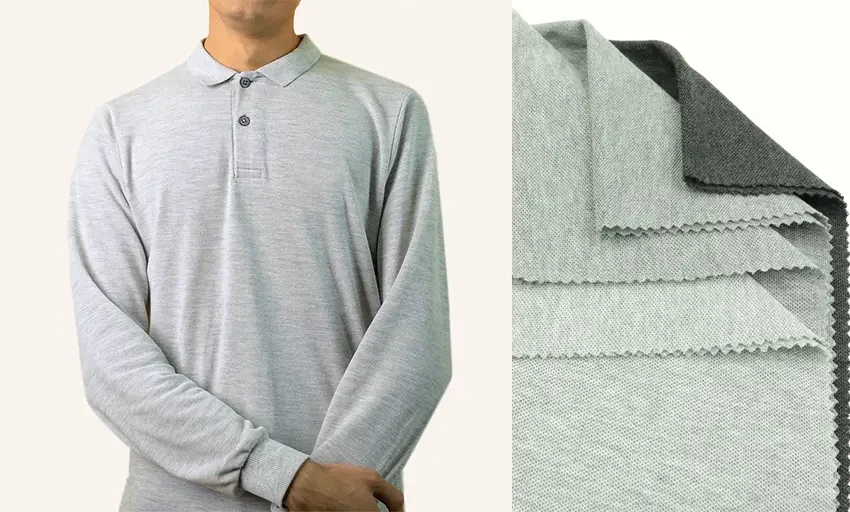
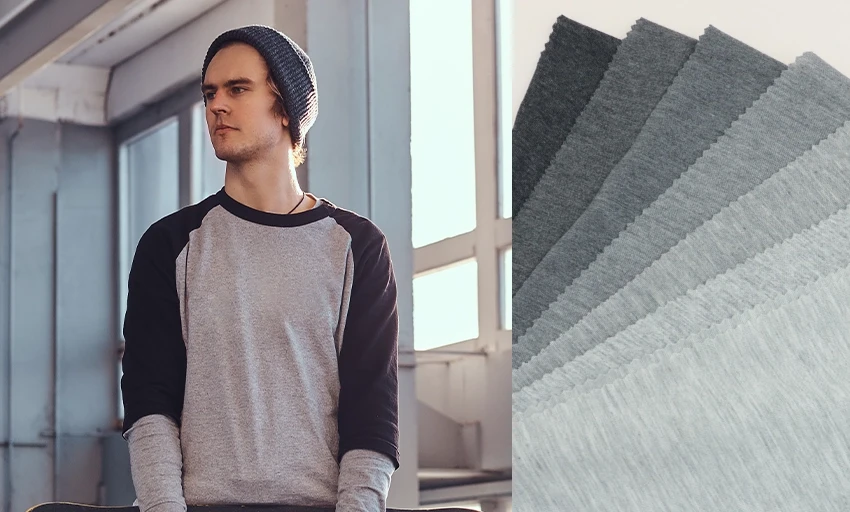
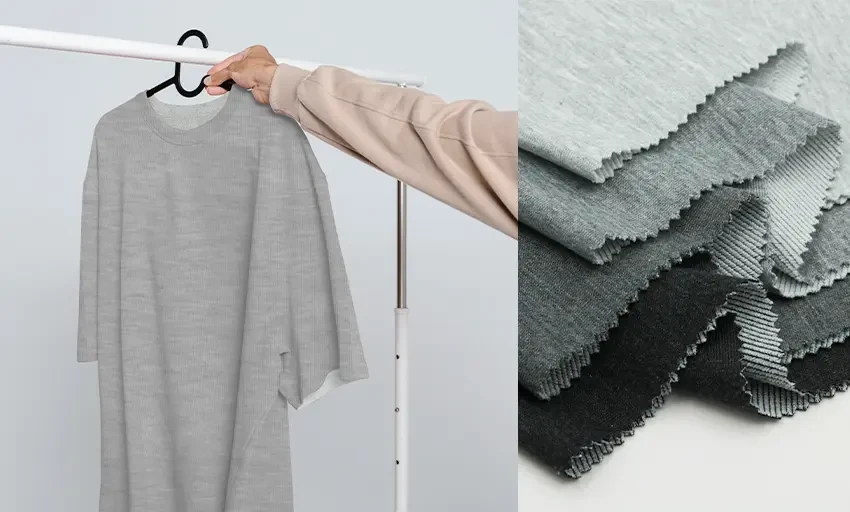
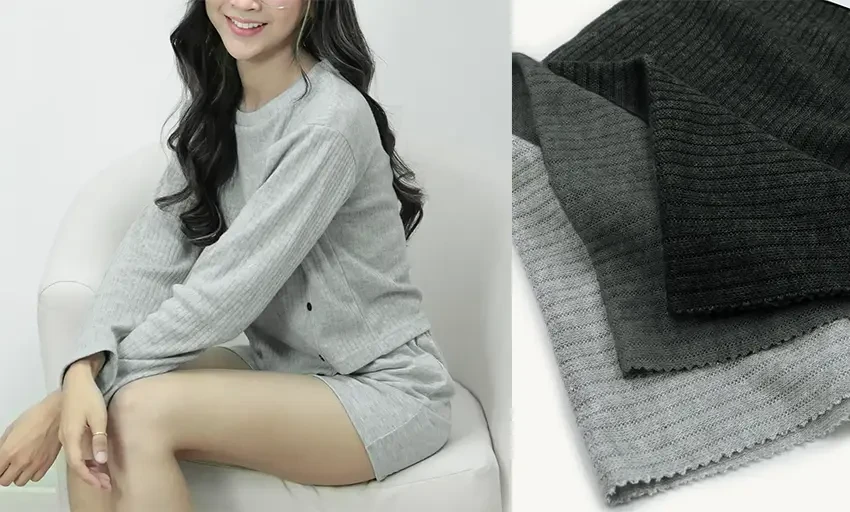
These specialized melange fabrics offer a range of benefits for T-shirt production, including:
- Unique Aesthetic : The melange effect creates a distinctive, visually appealing fabric that can elevate the design of T-shirts.
- Comfort and Breathability : These fabrics' knitted structures provide excellent breathability and a soft, comfortable hand feel.
- Stretch and Recovery : Rib and pique melange fabrics offer stretch and recovery, ensuring T-shirts maintain their shape and fit.
- Versatility : These melange fabrics can be used for various T-shirts

Conclusion
The versatility of polyester melange fabric allows it to be used for a wide range of garments, from casual T-shirts to more formal wear. The fabric's unique color effects and texture make it an excellent choice for creating distinctive and eye-catching designs. Furthermore, the fabric's cost-effectiveness makes it an attractive option for manufacturers looking to reduce production costs without compromising quality.
Polyester melange fabric is a sustainable choice for T-shirt production. The fabric's polyester content can be recycled, reducing waste and the environmental impact of production. Additionally, the fabric's durability and longevity reduce the need for frequent replacements, further reducing waste and environmental impact.
Contact Jong Stit Co., LTD. today for a free quote on wholesale Melange fabric for T-shirts. Don't wait—take the first step towards a more profitable and eco-friendly future for your T-shirt garment production!
- Sep 1, 2026
- May 14, 2026

- 70/72 Inch
- 275 GSM
- 36/37 Inch
- 170 GSM
- 46/47 Inch
- 240 GSM